The Stranger: The Graphic Novel
$24.51
Save $8.17 (33% off)
Check Best Price & CouponsFree shipping on orders over $50
In Stock: Ships within 1-2 business days
Product Description
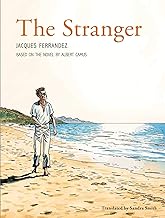
The Stranger: The Graphic Novel is a masterful visual adaptation of Albert Camus' seminal existentialist work. This edition transforms the profound narrative of Meursault, an emotionally detached French Algerian who commits a senseless murder, into a compelling sequential art format. By translating Camus' sparse, detached prose into evocative imagery, this graphic novel offers a fresh and accessible gateway into the themes of absurdism, alienation, and the search for meaning in an indifferent universe. It serves as both an introduction for new readers and a rich, interpretive companion for those already familiar with the classic text.
This adaptation meticulously captures the novel's iconic settings—from the blinding Algerian sun at the mother's funeral to the stark courtroom—using visual storytelling to amplify the emotional and philosophical impact. The artwork conveys Meursault's detachment and the story's oppressive atmosphere in ways that text alone cannot, making the philosophical concepts more tangible. It is an excellent resource for classic literature students seeking to deepen their understanding, for book clubs looking for a dynamic discussion piece, and for any reader intrigued by the intersection of philosophy and art.
Beyond being a mere comic book, this is a serious literary work that respects its source material while innovating within the graphic novel medium. It explores complex questions about society, justice, and human nature through a visual lens. Whether you are a fan of existential philosophy, a collector of illustrated classics, or simply someone who appreciates powerful storytelling, this graphic novel provides a unique and immersive reading experience that stands on its own as a significant work of art.
Check Best Price & CouponsRelated Products


Reviews
Visual Accessibility to Complex Philosophy
The primary advantage of this graphic novel adaptation is its ability to make Albert Camus' challenging existential themes accessible and engaging. The artwork provides immediate emotional and contextual cues that help readers grasp Meursault's alienation and the absurdity of his situation. Visual metaphors for concepts like the oppressive sun or societal judgment are powerfully rendered, offering a more intuitive understanding than pure text for many readers. This format can be particularly beneficial for visual learners, students grappling with the original novel's themes, or anyone who finds dense philosophical prose daunting.
Enhanced Emotional and Atmospheric Impact
As a bestselling adaptation, it excels in using the graphic novel medium to amplify the story's mood and subtext. The artist's interpretation of key scenes—the funeral, the beach, the trial—adds layers of meaning. The use of color, shadow, and panel composition directly conveys the protagonist's psychological state and the novel's existential dread in a visceral way. This creates a more immersive experience, allowing readers to *feel* the absurdity and detachment central to Camus' work, rather than just intellectually understanding it.
Ideal for Educational and Discussion Settings
This edition is a superb tool for classrooms and book clubs. The visual format sparks discussion, as interpretations of the artwork can lead to deeper analysis of the text. It serves as a comparative study in adaptation, inviting conversations about how meaning shifts across different media. For educators, it's a valuable resource to engage students with a literary classic in a contemporary and relatable format, potentially increasing comprehension and retention of the material.
Artistic Merit as a Standalone Work
Beyond its role as an adaptation, this graphic novel boasts significant artistic merit. The illustration style is often carefully chosen to reflect the tone of the novel—whether through stark, clean lines to mirror Camus' prose or more expressive techniques during pivotal moments. It demonstrates how the graphic novel medium can be used for serious philosophical exploration, appealing not only to literature fans but also to connoisseurs of sequential art. It validates the graphic novel as a legitimate form for adapting and discussing high literature.
While this graphic novel is a celebrated adaptation, potential readers should be aware of its inherent limitations as an interpretive work. The most significant consideration is that it represents one artist's visual interpretation of Camus' text. Readers who have a strong, personal vision of the characters and settings from the original novel may find this adaptation does not align with their imagination. The graphic novel format, by its nature, makes concrete what the prose often leaves ambiguous—such as the exact appearance of Meursault or the Algerian landscape—which can reduce the open-ended, interpretive space that many value in the original.
Furthermore, the adaptation necessarily condenses and selects elements from the full novel. Some of Camus' nuanced philosophical reflections, conveyed through Meursault's first-person narrative, may be abbreviated or conveyed solely through imagery, potentially losing some textual subtlety. Readers seeking the complete, unmediated experience of Camus' precise language and rhythmic prose should consider this a companion piece rather than a replacement. The emotional tone is also filtered through the artist's lens; the specific balance of detachment, irony, and passion may differ from a reader's direct engagement with the text.
Finally, the appeal of this format is subjective. Traditionalists or purists who believe great literature should be experienced solely through its original language may view any visual adaptation as supplementary or even reductive. The success of the adaptation heavily depends on the reader's connection to the artistic style. If the visual aesthetic does not resonate, it may hinder, rather than enhance, the reading experience. It is best approached as a new, complementary artistic work inspired by Camus' novel, not as a definitive version of it.


The Stranger: The Graphic Novel is a compelling and successful adaptation that brings Albert Camus' existential masterpiece to life through powerful visual storytelling. It masterfully translates the novel's themes of absurdism and alienation into the graphic novel medium, making the philosophy more accessible and emotionally resonant for a wide range of readers. Its strengths lie in its atmospheric artwork, its value as an educational tool, and its merit as a standalone piece of sequential art.
However, it is important to manage expectations. This is an interpretation, not a substitute for the original text. Readers who cherish Camus' specific prose style or who have firm personal visions of the story may find the adaptation limiting. It works best as a companion to the novel or as an introductory pathway for those new to existentialist literature.
Overall, this graphic novel is highly recommended for students, book clubs, fans of literary adaptations, and anyone interested in experiencing a classic story through a dynamic new lens. It is a purchase that offers both intellectual engagement and artistic appreciation, providing a fresh perspective on a timeless work of philosophical fiction.
Check Best Price & Coupons

![The Stranger [ 1946 ] a novel by Albert Camus (V-2, a Vintage Book)](https://m.media-amazon.com/images/I/91159wwfTLL._AC_UY218_.jpg)