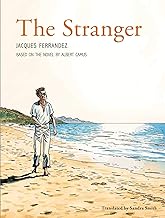
Albert Camus's literary and philosophical works are inextricably linked, forming a cohesive exploration of the human condition in a universe devoid of inherent meaning. While his novel The Stranger presents the absurd life through the narrative of Meursault, his philosophical essay, The Myth of Sisyphus, provides the theoretical framework. This Vintage International edition remains a vital text for anyone seeking to understand the full depth of Camus's thought. Reading one without the other offers only a partial view; together, they complete the portrait of Camus's absurdist philosophy.
The Absurd Hero: From Meursault to Sisyphus
In The Myth of Sisyphus, Camus defines the absurd as the conflict between humanity's innate desire for meaning, clarity, and order, and the silent, indifferent universe that offers none. The central question of the essay is philosophical suicide—whether one should succumb to the leap of faith (religion) or the leap of hope (political ideologies) to escape this tension. Camus argues against both, proposing instead the acceptance and revolt of the absurd man. This figure is embodied first in the mythological Sisyphus, condemned to eternally roll a boulder up a hill only for it to roll back down, and then, literarily, in Meursault from The Stranger.
Meursault is the absurd hero in narrative form. His famous indifference—to his mother's death, to love, to social conventions—is not mere apathy but a raw, unfiltered confrontation with reality. He does not lie to himself by inventing feelings or reasons he does not have. When he is on trial, the prosecution convicts him not for the murder of the Arab, but for his failure to cry at his mother's funeral. Society judges him for his refusal to play its game of manufactured meaning. In his final moments, facing execution, Meursault achieves a form of lucid acceptance. He opens himself to the "benign indifference of the universe," a direct enactment of the consciousness Camus describes in his philosophical work.
Consciousness, Revolt, and Freedom
Camus's philosophy in The Myth of Sisyphus outlines a three-step process for living the absurd life: consciousness, revolt, and freedom. Meursault's journey mirrors this progression. His consciousness is acute; he is hyper-aware of physical sensations—the sun on the beach, the glare before the murder—while being oblivious to emotional and social codes. This disconnect *is* his consciousness of the absurd.
His revolt is passive yet profound. He revolts by his sheer authenticity, his refusal to conform to narratives of grief, love, or remorse that he does not genuinely feel. This revolt culminates in his prison epiphany. The freedom Camus speaks of is not political or social, but the internal freedom that comes from abandoning hope for a transcendent meaning. Meursault, stripped of all hope for appeal or pardon, becomes free. He wishes for a crowd of spectators at his execution so they may greet him with "cries of hate." In this desire, he claims ownership of his fate, much like Sisyphus, who must be imagined as happy in his eternal, futile task.
The Sun, the Sea, and the Sensual World
A key aspect of Camus's existentialism (though he rejected the label) is its grounding in the physical, sensual world. Both works are saturated with imagery of the sun, sea, and earth. In The Stranger, the oppressive Algerian sun is almost a character, directly triggering the climactic murder. It represents the overwhelming, indifferent force of nature. Similarly, Camus's philosophy rejects abstract, intellectualized systems in favor of lived experience. The beauty of the world is the counterweight to its absurdity. Meursault's memories in prison are of simple, physical things—the smell of Marie's hair, the coolness of evening. This sensual appreciation is the content of his freedom, the source of what happiness is possible.
Why Read The Myth of Sisyphus After The Stranger?
Reading The Myth of Sisyphus after The Stranger transforms the novel from a simple story of an alienated man into a deliberate philosophical experiment. The essay acts as a decoder ring. It explains that Meursault is not a monster or a sociopath, but a radical example of a person living without illusions. It clarifies that his final peace is not nihilism, but a hard-won victory of consciousness.
For students and lovers of classic literature, engaging with both texts is essential. The Vintage International edition of The Myth of Sisyphus is particularly valuable for its accessibility and place within a respected literary series. It encourages readers to see Camus not just as a novelist or a philosopher, but as a unique artist whose medium was thought expressed through both narrative and essay. Understanding the symbiosis between these works deepens the impact of each.
Legacy of the Absurd: Camus's Enduring Relevance
The questions Camus raised in mid-20th century Algeria remain piercingly relevant today. In a world often seeming chaotic and meaningless, his prescription—to live without appeal, to revolt through authenticity, and to find joy in the struggle itself—offers a stark but honest form of resilience. The pairing of The Stranger and The Myth of Sisyphus provides a complete toolkit for this mindset.
Meursault shows us the face of the absurd man; Sisyphus gives us his mind and his mantra. One cannot fully grasp Camus's project by reading only the novel or only the essay. They are two sides of the same coin, two essential statements in the canon of philosophical essay and literary fiction. To explore the depths of Albert Camus's vision is to commit to both, to understand that the heroism of Sisyphus is silently reflected in the calm defiance of Meursault under the blinding Algerian sun.