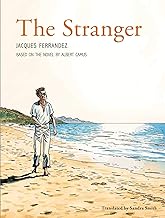
Albert Camus' The Stranger stands as a towering pillar of 20th-century literature, a novel so deceptively simple yet philosophically dense that it continues to challenge and captivate readers decades after its publication. More than just a story, it is a profound exploration of the human condition through the lens of absurdism. If you're seeking to understand not just the plot, but the very philosophy that pulses through its pages, you've come to the right place. This guide will serve as your companion to decoding Camus' masterpiece, examining its enduring questions about life, meaning, and societal norms.
At its core, The Stranger is an existentialist novel that forces us to confront a world devoid of inherent meaning. The story follows Meursault, an emotionally detached French Algerian who, after attending his mother's funeral, commits a seemingly senseless murder on a sun-drenched beach. The narrative is split into two parts: Meursault's life leading up to the crime and his subsequent trial, where his perceived indifference at his mother's funeral is tried more harshly than the murder itself. This structure brilliantly highlights the central conflict between an individual's authentic experience and society's demand for performative emotion and rational justification.
The Philosophy of the Absurd: Camus' Central Thesis
To truly grasp The Stranger, one must understand the philosophy of the absurd, which Camus developed alongside this and other works like The Myth of Sisyphus. The absurd, for Camus, is the fundamental conflict between the human desire for meaning, clarity, and purpose and the silent, indifferent universe that offers none. Meursault is the literary embodiment of this conflict. He does not mourn his mother in the expected way, not because he is cruel, but because he experiences events directly, without the filter of societal narratives about how one "should" feel.
His famous opening line, "Mother died today. Or, maybe yesterday; I can't be sure," immediately establishes his disconnect from conventional emotional scripts. This isn't nihilism—a belief in nothing—but a raw, unvarnished confrontation with reality as it is, not as we wish it to be. The scorching Algerian sun during the murder scene is often interpreted as the indifferent force of the universe, an overwhelming physical reality that triggers Meursault's fatal act, stripping it of any grand, novelistic motive. This pivotal moment is a key reason why the book is celebrated as a seminal work of absurdist fiction.
Meursault: Anti-Hero or Authentic Man?
Meursault is one of literature's most controversial protagonists. Is he a sociopathic monster, or is he the only authentic person in a world of hypocrisy? The trial scene is where Camus' critique of society crystallizes. The prosecutor constructs a narrative where Meursault's lack of tears at the funeral proves he has a "criminal heart," capable of premeditated murder. Society, represented by the court, cannot tolerate his honesty and emotional truth. They need a story, a reason, a connection between cause and effect that aligns with their moral framework.
Meursault's refusal to provide that story—to say he was sad, to believe in God for comfort, to express remorse in the way demanded—makes him a threat. In convicting him for his character rather than solely his act, the society in the novel reveals its own absurdity: its need to impose a false, comforting order on a chaotic and meaningless universe. By the end, in his prison cell, Meursault achieves a form of bleak liberation. He embraces the "gentle indifference of the world" and opens himself "to the tender indifference of the universe," finding a strange peace in accepting the absurd rather than raging against it.
Why The Stranger Remains a Modern Classic
The enduring power of The Stranger Albert Camus' novel lies in its timeless questions. In an age of curated social media personas and intense pressure to conform to emotional and ideological expectations, Meursault's authenticity is more jarring and relevant than ever. The novel asks: How much of our emotional life is genuine feeling, and how much is performance? What happens when an individual's truth clashes with collective fiction? These questions secure its place not just as a classic literature staple, but as a vital modern classic.
Its stylistic brilliance also contributes to its status. Camus' use of a sparse, precise, and almost journalistic prose style—later termed "white writing"—mirrors Meursault's perception. The language is stripped of metaphor and florid emotion, reflecting the stark, factual reality the character inhabits. This makes the philosophical undertones all the more powerful, as they emerge not from grand speeches, but from the accumulation of simple, observed details.
Common Misconceptions and Critical Pitfalls
Many first-time readers fall into interpretive traps that can obscure the novel's depth. One major pitfall is reading Meursault as simply apathetic or stupid. His clarity in the final chapters reveals a deep, if unconventional, intelligence and capacity for feeling. Another common error is to view the novel as purely pessimistic. While it rejects false hope and celestial meaning, it affirms the value of earthly experience—the feel of the sun, the taste of coffee, the memory of Marie—and the freedom that comes from accepting one's fate without illusion.
Furthermore, separating Camus from other existentialists like Sartre is crucial. Camus' absurdism is a philosophy of revolt and lucidity, not of despair or political ideology. Meursault's final acceptance is not surrender, but a form of rebellion against the lies society tells itself to avoid the truth of the human condition.
Exploring Camus' Legacy and Where to Start
The Stranger is the perfect gateway into philosophical fiction and the work of Albert Camus. For those captivated by its themes, the natural next step is Camus' philosophical essay, The Myth of Sisyphus, which directly articulates the theory of the absurd presented in the novel. Following that, his novel The Plague explores themes of solidarity, rebellion, and collective struggle against an indifferent universe.
If you are ready to experience or revisit this defining novel, consider exploring the edition available here. Whether you are a student of philosophy, a lover of profound literature, or a reader seeking a story that challenges your deepest assumptions, The Stranger offers an unforgettable journey into the heart of what it means to be human in a world that offers no easy answers. Its status as a perennial ebook bestseller is a testament to its ongoing power to provoke thought and feeling in every new generation of readers.