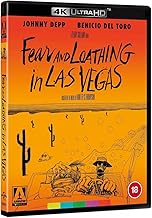
Hunter S. Thompson's Fear and Loathing in Las Vegas: A Savage Journey to the Heart of the American Dream is not merely a book; it is a cultural detonation. More than five decades after its publication, its frenetic energy, scathing satire, and unique narrative voice continue to captivate and confuse readers in equal measure. This article delves deep into the heart of this counterculture classic, unpacking the genius of Gonzo journalism, its relentless interrogation of the American Dream, and why this satirical novel remains a vital piece of modern literature. Whether you're a first-time reader or a longtime acolyte of Dr. Thompson, understanding the context and craft behind the chaos is essential.
The Birth of Gonzo: More Than Just Journalism
To comprehend Fear and Loathing in Las Vegas, one must first understand the literary revolution Thompson spearheaded: Gonzo journalism. Traditional reporting aims for objective detachment. Gonzo, in stark contrast, places the reporter at the center of the story, not as an observer, but as a primary actor and amplifier of the event's subjective truth. Thompson didn't just cover the 1971 Mint 400 motorcycle race in Las Vegas; he immersed himself in a psychedelic nightmare, and that experience became the story.
This method was born from a blend of desperation and brilliance. Facing a deadline with no conventional story, Thompson submitted his raw, drug-fueled notes. The result was a narrative so visceral, personal, and outrageously honest that it transcended reporting to become a new form of literary art. The voice in Fear and Loathing is unfiltered Id—paranoid, hilarious, enraged, and profoundly perceptive. It captures the sensory overload and moral decay of early 70s America in a way no straight-laced article ever could. For those intrigued by this unique authorial voice, exploring Thompson's seminal work is the definitive experience.
Deconstructing the American Dream in the Neon Desert
Las Vegas is the perfect stage for Thompson's savage journey. It is the ultimate monument to the corrupted American Dream—a city built on illusion, greed, and instant gratification in the middle of a barren desert. Raoul Duke (Thompson's alter-ego) and his Samoan attorney, Dr. Gonzo, arrive not to find the Dream, but to watch it die, or perhaps to confirm it was always a hallucination.
Thompson dissects the Dream's promise of happiness through material success and reveals its hollow core. The casinos promise wealth but deliver debt. The glamorous shows mask profound emptiness. The city itself is a monument to bad taste and excess, a "psychic haven" for those fleeing reality. Duke's drug-addled perceptions strip away the glitter to reveal the machinery of manipulation underneath. His famous line, "We were somewhere around Barstow on the edge of the desert when the drugs began to take hold," isn't just an opening; it's a metaphor for entering the national subconscious, where the promises of post-war America were dissolving into paranoia and disillusionment.
Characters as Archetypes: Duke, Gonzo, and the Bat Country of the Mind
Raoul Duke and Dr. Gonzo are more than characters; they are archetypal forces. Duke is the hyper-aware, journalistic consciousness trying to document the madness, even as he is consumed by it. He is the observer-participant, the Gonzo engine. Dr. Gonzo, his 300-pound Samoan attorney, is pure, unchecked Id—chaotic, violent, and visceral. Together, they form a single psyche navigating a landscape of its own making.
Their journey through Las Vegas—from the Bazooko Circus casino to the Mint 400 to a disastrous District Attorney's convention—is a series of escalating confrontations with the grotesque underbelly of "normal" society. The so-called straight world they encounter is often more depraved and insane than their own chemically-induced chaos. This inversion is central to Thompson's satire: the real madness isn't in the individual's mind, but in the collective cultural psyche that created a place like Vegas.
Enduring Legacy: Why "Fear and Loathing" Still Resonates
Why does this bizarre, nonlinear tale of drug use and desert madness remain a bestseller book and cultural touchstone? Its longevity lies in its timeless themes and revolutionary style.
First, its critique of media, politics, and the emptiness of consumer culture feels more relevant than ever. In an age of curated social media personas and "fake news," Thompson's insistence on subjective, immersive truth-telling is a radical antidote. Second, it captures a specific, potent moment of national hangover—the end of the 1960s counterculture dream—with such raw emotion that it speaks to any era of disillusionment. Finally, its sheer linguistic power is undeniable. Thompson's prose is a weapon, a symphony, and a drug trip all at once. Phrases like "the high-water mark" speech about the 60s have entered the lexicon, describing moments of peak hope before the inevitable crash.
Common Misconceptions and Critical Pitfalls
Many first-time readers fall into traps that can obscure the book's depth. A major pitfall is reading it only as a wild drug story. While the substance abuse is graphic and central, it is the vehicle for the satire, not the destination. Focusing solely on the narcotics misses the profound social and political commentary.
Another mistake is dismissing Duke/Thompson as a mere nihilist. There is deep, romantic loathing in the book, but also a profound, wounded love for what America could have been. The "fear and loathing" is directed at the betrayal of ideals, not at the ideals themselves. Furthermore, assuming the events are purely fictionalized undermines the Gonzo method. The truth lies in the emotional and perceptual reality Thompson conveys, a reality often more accurate than factual reporting.
Thompson's Gonzo Legacy in Modern Culture
The impact of Fear and Loathing in Las Vegas and Hunter S. Thompson's Gonzo style ripples through modern journalism, literature, and film. New journalists and writers adopted a more personal, voice-driven approach. The book directly influenced cultural phenomena from the works of writers like Chuck Palahniuk to the aesthetic of films like The Big Lebowski. Its attitude of skeptical, participatory rebellion became a blueprint for alternative reporting and commentary.
Owning and engaging with this modern literature cornerstone is a rite of passage for readers interested in the edges of narrative form and social critique. It is a challenging, offensive, and breathtakingly brilliant book that refuses to be ignored. To fully grasp the seismic shift it represented, one must experience the original text, a journey that begins with a simple decision to step into the convertible and head for Las Vegas.
In conclusion, Fear and Loathing in Las Vegas endures because it is a perfect storm of form and content. The chaotic Gonzo style is the only possible way to tell a story about the chaotic death rattle of an era. It is a philosophical inquiry disguised as a crime spree, a work of gonzo journalism that became a defining counterculture classic. Its portrayal of the search for, and subsequent demolition of, the American Dream in the neon desert remains one of the most potent and unforgettable in all of American letters.

![Fear and Loathing in Las Vegas [DVD]](https://m.media-amazon.com/images/I/91RZMbnPpyL._AC_UY218_.jpg)
![Fear and Loathing in Las Vegas (The Criterion Collection) [4K UHD]](https://m.media-amazon.com/images/I/815Dxqc0X7L._AC_UY218_.jpg)
![Fear and Loathing in Las Vegas [Blu-ray]](https://m.media-amazon.com/images/I/71kZZqdD57L._AC_UY218_.jpg)
![Fear and Loathing in Las Vegas (The Criterion Collection) [Blu-ray]](https://m.media-amazon.com/images/I/81h7QOrWU6L._AC_UY218_.jpg)