Few books have captured the chaotic spirit of an era quite like Hunter S. Thompson's Fear and Loathing in Las Vegas. More than just a novel, it's a literary Molotov cocktail thrown at the heart of the American Dream, a first-person account of a drug-fueled descent into the neon belly of Las Vegas that birthed an entire genre. For readers seeking to understand the raw, unfiltered power of gonzo journalism, this book is not just a starting point; it is the defining scripture.
At its core, the narrative follows Raoul Duke (Thompson's thinly-veiled alter-ego) and his attorney, Dr. Gonzo, on a purported journalistic assignment to cover a motorcycle race. What unfolds is a surreal, hallucinatory odyssey fueled by a pharmacopoeia of substances. The assignment becomes a mere pretext for a deeper, more philosophical quest: to find the American Dream. Thompson uses the distorted lens of extreme intoxication to expose the underlying rot, hypocrisy, and emptiness he perceived in the early 1970s American psyche, particularly in the manufactured oasis of Las Vegas.
The Birth and Essence of Gonzo Journalism
Gonzo journalism is often misunderstood as simply "writing while on drugs." While subjective experience and chemical enhancement were part of Thompson's toolkit, the true essence of Gonzo is the complete immersion of the reporter into the story, making the journalist's reactions, biases, and emotional state the central narrative force. Objectivity is discarded in favor of a heightened, subjective "truth." Fear and Loathing in Las Vegas is the purest expression of this. Thompson doesn't report on the events; he *is* the event. The reader experiences the paranoia, the manic energy, and the profound disillusionment firsthand, creating an unparalleled sense of immediacy and authenticity.
Hunter S. Thompson: The Architect of Chaos
Understanding the book is impossible without understanding the man. Hunter S. Thompson was a force of nature—a fierce critic of authority, a champion of individual liberty, and a writer who lived his stories with terrifying commitment. His work, especially this seminal novel, transcends mere counterculture literature to become a foundational text of 20th-century dissent. Thompson's voice—sardonic, prophetic, and wildly poetic—turns a simple road trip into a mythic journey. He wasn't just writing about the death of the 1960s counterculture dream; he was performing its autopsy in real-time on the page.
Decoding the Psychedelic Adventure: Themes and Symbols
Beneath the surface-level chaos of the psychedelic adventure lies a deeply coherent and scathing critique. Las Vegas itself is the ultimate symbol: a glittering monument to greed, illusion, and hollow pleasure built in the middle of a desert. It represents the corrupted American Dream Thompson sought. The drugs are not merely for recreation; they are tools for perception, weapons against boredom, and ultimately, a futile attempt to escape a reality he found intolerable.
The famous "wave speech"—where Duke reflects on the high-water mark of the 1960s counterculture—stands as one of the most poignant passages in modern American classic novel writing. It captures the precise moment when hope curdled into cynicism, a feeling that resonates deeply with successive generations facing their own societal disillusionment. This ability to articulate a specific historical moment with universal emotional truth is a key reason the book endures as a bestseller-book decades after its publication.
Common Misconceptions and Critical Pitfalls
Many first-time readers fall into the trap of viewing Fear and Loathing solely as a celebratory drug romp. This is a profound misreading. The humor is pitch-black, and the experience is ultimately harrowing. Thompson depicts the horror and the comedy in equal measure. The laughter is often a nervous reaction to the abyss he's staring into. Another common mistake is dismissing the prose as merely chaotic. In reality, Thompson exercised immense control over his language. The manic, spiraling sentences are meticulously crafted to induce a specific psychological effect in the reader, mirroring Duke's own disintegrating mental state.
The Enduring Legacy in Culture and Literature
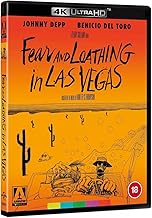
The impact of Fear and Loathing in Las Vegas is immeasurable. It redefined the possibilities of nonfiction and influenced countless journalists, writers, and artists. Its aesthetic and attitude permeate music, film, and fashion. The 1998 film adaptation by Terry Gilliam, starring Johnny Depp and Benicio del Toro, became a cult classic in its own right, introducing Thompson's world to a new audience and cementing the visual iconography of the story. The book remains a touchstone for anyone skeptical of authority, mainstream narratives, and the sanitized version of reality.
In the canon of 20th-century fiction, it occupies a unique, unclassifiable space. It is a work of fiction based on intensely real experiences and reportage. It is a comedy that is not funny, a tragedy that is uproarious. It challenges every convention of storytelling and journalism, demanding that the reader engage with the messy, complicated, and subjective nature of truth.
Why You Should Experience This Gonzo Masterpiece
Reading Fear and Loathing in Las Vegas is an experience, not a passive activity. It is a ride that will leave you exhilarated, disturbed, and intellectually provoked. It offers a masterclass in voice and style, a brutal piece of social commentary, and a hilarious, terrifying journey into one man's distorted reality. For aspiring writers, it's a lesson in breaking rules with purpose. For students of culture, it's an essential primary source on the end of an era. For anyone who has ever felt at odds with the prevailing culture, it is a rallying cry and a sympathetic companion.
To own a copy of this defining American classic is to hold a piece of literary history. Whether you're drawn to the legacy of Hunter S. Thompson, the origins of gonzo, or simply one of the most unforgettable narratives ever put to paper, the journey to Las Vegas with Raoul Duke and Dr. Gonzo is one you will not forget. It is more than a book; it is a state of mind.


![Fear and Loathing in Las Vegas [DVD]](https://m.media-amazon.com/images/I/91RZMbnPpyL._AC_UY218_.jpg)
![Fear and Loathing in Las Vegas (The Criterion Collection) [4K UHD]](https://m.media-amazon.com/images/I/815Dxqc0X7L._AC_UY218_.jpg)
![Fear and Loathing in Las Vegas [Blu-ray]](https://m.media-amazon.com/images/I/71kZZqdD57L._AC_UY218_.jpg)
![Fear and Loathing in Las Vegas (The Criterion Collection) [Blu-ray]](https://m.media-amazon.com/images/I/81h7QOrWU6L._AC_UY218_.jpg)