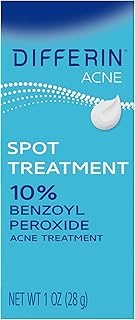
For anyone navigating the often frustrating journey of acne management, the search for an effective, long-term solution can feel endless. Among the myriad of over-the-counter and prescription options, one name consistently stands out in dermatological circles and skincare forums alike: Differin Gel. This topical treatment, containing 0.1% adapalene, represents a significant shift in accessible acne care, offering a prescription-strength retinoid without the need for a doctor's visit in many regions. But does it live up to the hype? This comprehensive review dives deep into the science, application, and real-world results of using Adapalene Gel 0.1% to combat acne and clogged pores.
What is Adapalene and How Does Differin Gel Work?
Adapalene is a third-generation topical retinoid, a class of vitamin A derivatives renowned for their ability to regulate skin cell turnover. Unlike its older cousins, tretinoin and isotretinoin, adapalene was specifically engineered to target acne with a more favorable side-effect profile. It works through a multi-pronged attack on the acne formation process. Primarily, it normalizes the lifecycle of skin cells within the follicle, preventing them from sticking together and forming the initial plug of a clogged pore. By keeping the pore clear, it creates an environment where acne-causing bacteria, *Cutibacterium acnes*, struggle to proliferate. Furthermore, it exerts potent anti-inflammatory effects, calming the redness and swelling associated with inflammatory acne lesions like papules and pustules. This combination of comedolytic (pore-unclogging) and anti-inflammatory actions makes it uniquely effective for both preventing new breakouts and treating existing ones.
Key Benefits of Using Differin Gel 0.1% for Acne
The appeal of this topical retinoid extends beyond its primary mechanism. Users and dermatologists report several compelling benefits that contribute to its status as a first-line acne treatment.
- Prevents and Treats Multiple Acne Types: It is clinically proven to be effective against non-inflammatory comedones (blackheads and whiteheads) as well as inflammatory acne (red bumps and pustules).
- Promotes Long-Term Skin Health: By continuously preventing pore blockages, it offers a proactive solution rather than just reacting to existing pimples.
- Accessible Strength: The 0.1% concentration provides a powerful yet manageable entry point into retinoid use, bridging the gap between milder OTC products and stronger prescription formulas.
- Paraben-Free Formula: Many versions, including the one we're reviewing, are formulated without parabens, making it a suitable choice for those looking to avoid these specific preservatives.
- Improves Skin Texture and Tone: With consistent use, the accelerated cell turnover can lead to smoother skin, diminished post-acne marks (hyperpigmentation), and a more refined complexion.
Who is Differin Gel Best For?
This treatment is particularly well-suited for individuals with mild to moderate acne. It's a fantastic option for teens and adults struggling with persistent blackheads, whiteheads, and small, inflamed pimples. Those who have tried salicylic acid or benzoyl peroxide with limited success often find retinoids like adapalene to be a game-changer. It's also worth considering for anyone with acne-prone skin looking for a preventative maintenance product, not just a spot treatment. However, it may be less suitable for severe cystic or nodular acne, which typically requires a dermatologist's guidance and potentially systemic medication.
Is Differin Gel Suitable for Sensitive Skin?
This is a common and crucial question. While adapalene is known for being less irritating than some other retinoids, it can still cause a period of adjustment often referred to as "retinization." This may include dryness, peeling, redness, and a temporary increase in breakouts (purging) during the first 2-6 weeks. For sensitive skin, the key is a minimalist, gentle approach. Start by applying a pea-sized amount for the entire face just 2-3 times a week, over a moisturizer to buffer the effect. Always follow with sunscreen during the day, as retinoids increase photosensitivity. The paraben-free cream formulation can be gentler than some gel bases, but patch testing is always recommended.
How to Use Adapalene Gel 0.1% Correctly for Best Results
Success with any retinoid hinges on proper application and patience. Here is a step-by-step guide to integrating adapalene gel 0.1 into your routine.
- Cleanse Gently: Wash your face with a mild, non-abrasive cleanser and pat dry completely. Your skin must be bone-dry before application, as applying to damp skin can increase irritation.
- Apply a Pea-Sized Amount: Dispense no more than a pea-sized portion of the gel or cream. This is enough to cover the entire face, avoiding the delicate eye area, lips, and corners of the nose.
- Start Slowly: Begin with applications every other night, or even just twice a week, to allow your skin to acclimate.
- Moisturize: Wait 20-30 minutes for the adapalene to absorb, then apply a non-comedogenic, fragrance-free moisturizer to combat dryness.
- Be Patient and Consistent: Visible improvement typically takes 8-12 weeks of consistent use. Do not give up during the initial purging phase unless irritation is severe.
- Sunscreen is Non-Negotiable: Use a broad-spectrum SPF 30 or higher every morning. Retinoids make your skin more susceptible to sun damage.
What to Expect: The Differin Gel Journey (Weeks 1-12)
Understanding the timeline can help manage expectations and prevent early discontinuation.
- Weeks 1-4 (The Adjustment Phase): You may experience dryness, flaking, redness, and a potential increase in breakouts (purging) as the retinoid accelerates the turnover of clogged pores to the surface. This is a sign it's working, not a sign it's failing.
- Weeks 5-8 (The Turning Point): Irritation typically subsides. You should notice a decrease in the formation of new inflammatory lesions. Existing breakouts may heal faster.
- Weeks 9-12 (Visible Results): This is when the magic happens for most users. A significant reduction in both inflammatory and non-inflammatory acne should be apparent. Skin texture begins to smooth out, and post-acne marks may start to fade.
- Beyond 12 Weeks (Maintenance): For continued prevent acne benefits, most users continue applying it 3-7 times per week as a cornerstone of their long-term skincare regimen.
Potential Side Effects and How to Manage Them
While generally well-tolerated, side effects are common, especially at the start. The most frequent are dryness, scaling, stinging, and erythema (redness). To manage these:
- Scale Back Frequency: If irritation is significant, reduce application to once every two or three nights.
- Moisturize Strategically: Apply a bland moisturizer before (buffering) and/or after the retinoid.
- Avoid Harsh Products: Discontinue use of other exfoliants (AHAs, BHAs, physical scrubs), astringents, and high-strength benzoyl peroxide while your skin adjusts.
- Listen to Your Skin: If you experience severe burning, swelling, or blistering, discontinue use and consult a healthcare professional.
Final Verdict: Is This Adapalene Treatment Worth It?
Based on its clinical efficacy, accessibility, and ability to provide a long-term solution for acne, Differin Gel earns a strong recommendation for individuals with mild to moderate acne. It is not a quick fix; it requires commitment, a gentle skincare approach, and patience through a potentially challenging adjustment period. However, for those who persevere, the rewards can be transformative—not just in clearing existing breakouts, but in fundamentally changing the skin's behavior to prevent acne and clogged pores from forming in the first place. When used correctly as part of a simple routine focused on cleansing, moisturizing, and sun protection, this topical retinoid can be a powerful tool for achieving and maintaining clearer, healthier-looking skin.