Finding the perfect ring size is a critical step in jewelry shopping, whether you're planning a surprise proposal, buying a gift, or treating yourself. An ill-fitting ring can be uncomfortable, insecure, or even risk being lost. While many people resort to guesswork or makeshift methods, the only reliable way to ensure accuracy is by using a dedicated ring sizer. This comprehensive guide will walk you through everything you need to know about these essential tools, from how they work to how to choose the best one for your needs.
What is a Ring Sizer and Why Do You Need One?
A ring sizer, also known as a finger sizer or ring size gauge, is a specialized tool designed to measure the circumference of your finger to determine your corresponding standard jewelry size. Unlike printable paper strips or piece-of-string methods, a professional ring sizing tool provides consistent, durable, and accurate measurements. The need for precision cannot be overstated. A size too small won't slide over your knuckle, while a size too large will spin and slip off. For significant purchases like engagement rings or heirloom pieces, getting the size right the first time saves time, money, and stress.
Common Ring Sizing Mistakes and How to Avoid Them
Many DIY sizing attempts lead to errors. Here are the most frequent pitfalls:
- Measuring at the Wrong Time: Fingers fluctuate in size throughout the day due to temperature, hydration, and salt intake. They are typically smallest in the cool morning and swell in the evening. Always measure at the end of the day for the most reliable fit.
- Using Non-Standard Tools: Paper strips can stretch or tear, and strings can compress, yielding inconsistent results. A dedicated plastic or metal gauge is non-flexible and standardized.
- Measuring the Wrong Knuckle: The ring must fit comfortably over your largest knuckle but not be loose on the base of your finger. A good ring measuring tool will account for this.
- Ignoring Ring Width: Wider bands (over 6mm) feel tighter than narrow bands. If you're sizing for a wide ring, you may need to go up a half or full size, which a quality gauge can help you simulate.
Types of Ring Sizers: From Plastic Gauges to Professional Kits
Not all ring sizers are created equal. Understanding the different types helps you make an informed choice.
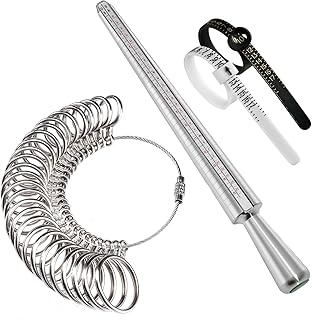
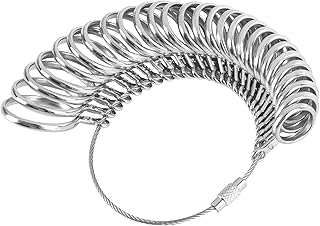
- Plastic Ring Sizers (Loop-Style Gauges): These are sets of pre-sized plastic loops, often marked from US size 1 to 17, connected on a keyring. You try different loops on your finger until you find the one that slides on with a snug but comfortable fit. Tools like the 1 Pack US Ring Sizer Measuring Gauge are popular for their simplicity, durability, and reusability.
- Mandrel Sizers (Tapered Sticks): These are conical metal or plastic rods with size markings. You slide a ring you already own down the mandrel until it stops, and read the size at that point. This is perfect for sizing existing rings, not fingers.
- Printable Paper Sizers: These are free, downloadable strips you cut out and wrap around your finger. While better than nothing, they are the least accurate due to paper flexibility and printer calibration issues.
- Professional Jewelers' Kits: These comprehensive sets include multiple sizing methods, often with half-size increments and width simulators for ultimate accuracy, typically used in jewelry stores.
Why a Reusable Plastic Ring Sizer is Your Best Home Solution
For the average person needing to find their US ring size at home, a reusable plastic gauge offers the ideal balance of accuracy, affordability, and convenience. Unlike paper, it won't degrade. Unlike string, it provides a consistent, non-compressible measurement. A product like the reusable plastic ring sizer is designed for multiple uses, making it perfect for couples measuring together or for keeping on hand for future jewelry purchases. Its durability means you get a one-time investment for a lifetime of accurate sizing.
Step-by-Step: How to Use a Ring Sizer Accurately
Follow these steps for a perfect measurement using a loop-style gauge:
- Prepare Your Finger: Ensure your hands are at normal body temperature. Remove any lotion from the finger you're measuring.
- Select the Right Time: As mentioned, measure in the late afternoon or evening when fingers are at their largest.
- Start Testing Sizes: Begin with a size you think might be close. Slide the plastic loop over your knuckle. It should require a gentle push.
- Assess the Fit: The ring should slide over your knuckle with slight resistance and fit snugly at the base of your finger without feeling tight. You should feel a slight resistance when trying to remove it over the knuckle.
- Check for Comfort: Wear the sizer for a few minutes. Make a fist and wiggle your fingers. It should not pinch or feel constricting. If your finger turns a different color or feels numb, the size is too small.
- Account for Dominant Hand: The fingers on your dominant hand are often slightly larger. Measure the specific finger on the specific hand that will wear the ring.
- Verify with Adjacent Sizes: Try the half-size above and below your initial finding to confirm. The perfect fit is often a nuanced choice.
Beyond the Basics: Special Sizing Considerations
Standard sizing works for most, but certain situations require extra thought.
- Knuckle Size vs. Finger Base: If your knuckle is significantly larger than your finger's base, the ring must fit over the knuckle. You may need a sizing tool that can simulate this, or consider a ring style with an open shank or sizing beads added later by a jeweler.
- Seasonal and Life Changes: Pregnancy, weight fluctuations, and arthritis can permanently change finger size. It's wise to re-measure every few years for frequently worn rings.
- Sizing for Others Secretly: The most reliable method is to borrow a ring they already wear comfortably on the intended finger. Use a mandrel sizer or a ring size gauge with cut-outs to determine the size of that borrowed ring. Alternatively, trace the inner circle of the ring on paper when they aren't wearing it.
Choosing Your Ring Sizer: Key Features to Look For
When selecting a jewelry sizing tool, consider these features:
- Material: Durable, smooth plastic is ideal for home use. It's lightweight, gentle on the skin, and long-lasting.
- Size Range: Ensure it covers the full standard US size range (typically 1-17 for women and men).
- Clear Markings: Size numbers should be easy to read and permanently etched or printed.
- Reusability: A tool you can use repeatedly offers far better value than a disposable one.
- Ease of Use: The loops should be easy to handle and try on sequentially. A keyring or compact case helps keep them organized.
Investing in a simple, well-made tool like a reusable plastic ring sizer eliminates the guesswork from one of the most important aspects of jewelry ownership. By understanding how to use it correctly and avoiding common mistakes, you can achieve a comfortable, secure fit that will let you enjoy your rings for years to come. Remember, when it comes to something as sentimental and valuable as a ring, precision is not a luxury—it's a necessity.