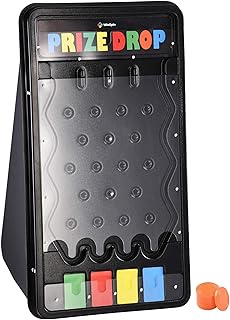
From its iconic appearances on television game shows to its widespread adoption at fairs and corporate events, the Plinko game has cemented itself as a timeless classic of chance and excitement. Its simple premise—dropping a puck down a pegged board to land in a scoring slot—belies the sheer fun and engagement it generates. Whether you're planning a large-scale carnival, a bustling tradeshow booth, or a lively backyard party, understanding how to leverage this game is key to creating memorable experiences. This comprehensive guide will walk you through everything from the basic rules and subtle strategies to selecting the perfect board for your needs, with a special focus on versatile, event-ready options like the iElyiEsy Prize Drop board.
What is a Plinko Game? Understanding the Basics
At its core, a Plinko game is a game of chance played on a vertical board studded with an array of pegs. A player releases a disc or puck from the top, and it cascades down, bouncing off the pegs in a random, unpredictable path before landing in a scoring zone or prize slot at the bottom. The beauty of Plinko lies in its simplicity and visual suspense. Everyone, from children to adults, can grasp the concept instantly, yet no one can predict the exact outcome, making every drop a moment of anticipation. This universal appeal is why it has successfully transitioned from TV studios to becoming a staple in the world of carnival games and party games.
The Official (and House) Rules of Plinko
While the classic TV version has specific rules, part of the charm of physical Plinko boards is their adaptability. Here’s a breakdown of common rule sets you can implement.
Classic Scoring Rules
In the traditional format, the bottom of the board is divided into several slots, each assigned a point value or a specific prize (e.g., 100 points, 500 points, a small toy, a gift card). Players typically earn one puck per turn or per ticket. The slot where the puck lands determines their winnings. For a prize drop game at an event, you can align slots with tiered prizes to build excitement.
Common Variations for Events
Event organizers often tweak rules to fit their goals. A popular variation is the "Double or Nothing" drop, where a player can risk their initial prize on a second drop for a chance to upgrade. Another is the "Skill Stop" rule, where some boards allow players to influence the puck's initial release point, adding a minor element of strategy. The key is to establish clear, simple rules that keep the line moving and the fun level high.
Is There a Winning Strategy for Plinko?
Given that the puck's path is governed by physics and chaos theory, a guaranteed winning strategy for a pure Plinko game doesn't exist. However, understanding probability can slightly tilt the odds in your favor, especially on boards with a symmetrical peg layout.
The Center Drop Myth and Reality
Many believe dropping the puck in the very center yields the highest chance of landing in the valuable center slots. While this seems logical, the chaotic bounce means the outcome is still highly random. Statistically, a center drop creates a more balanced distribution of possible endpoints, but it doesn't guarantee a high-value win. For event organizers, this is perfect—it maintains the game's integrity as one of chance.
Maximizing Your Chances at an Event
For players, the best "strategy" is to observe if the board has any consistent biases (e.g., a slight tilt) and to ensure a clean, straight release of the puck. For organizers, the strategy lies in prize placement. Putting the most coveted prizes in the less probable edge slots can increase play duration and suspense, while placing mid-tier prizes in the more common central slots ensures most players win something, keeping them happy.
Choosing the Perfect Plinko Board for Your Event
Not all Plinko boards are created equal. The right choice depends heavily on your venue, audience, and logistical needs. Here are the critical features to consider.
Portability and Setup: The Foldable Advantage
For mobile entertainers, event planners, or anyone who needs to move their game frequently, portability is paramount. A board with a foldable game board and stand is a game-changer. It transforms a bulky, awkward item into a manageable package that fits in a car and can be set up or taken down by one or two people in minutes. This feature is essential for back-to-back weekend events like farmers' markets or school fairs.
Durability for Indoor and Outdoor Fun
If your events span different environments, you need a board built to last. An outdoor game board must be constructed from weather-resistant materials like PVC or treated wood to withstand sun and occasional moisture. Look for sturdy pegs that won't pop out and a stable stand that won't wobble on uneven ground. A board that performs well both indoors and out offers the greatest return on investment.
Engagement Through Customization
To truly make the game your own, seek out customizable game features. The ability to change the labels or prizes in the slots at the bottom allows you to tailor the game for different events—a corporate logo for a tradeshow game, candy for a kids' birthday, or raffle tickets for a church fundraiser. Some advanced boards even allow you to reconfigure the peg layout to change the difficulty and prize distribution.
Why the iElyiEsy 31"x21" Prize Drop Plinko Board Stands Out
When evaluating boards against the criteria above, the iElyiEsy Prize Drop Plinko board emerges as a particularly strong contender for event professionals and serious party hosts. Its design directly addresses the common pain points of transport, setup, and versatility.
First, its foldable stand and board design solve the portability issue elegantly. You're not just getting a board; you're getting a complete, integrated system that packs down compactly. Second, its robust construction is advertised for outdoor use, suggesting durability where cheaper boards might fail. The inclusion of 10 customizable playing pucks means you can color-code teams or players, adding another layer to your event planning. The 7-grid prize slot configuration offers a good balance of prize differentiation without being overly complex. For anyone needing a reliable, engaging, and mobile Plinko game solution, this model checks the critical boxes.
Creative Uses for Plinko Games Beyond Carnivals
While synonymous with carnivals, the application of Plinko is limited only by your imagination. Here are some innovative ways to use it:
- Corporate Tradeshows & Team Building: Use it as a lead-generation tool. Visitors drop a puck to win a prize, but first, they must scan their badge or drop a business card. It draws crowds to your booth like nothing else.
- Classroom Learning: Teachers can use it to make quiz review fun. Different slots correspond to different point-value questions.
- Fundraisers: A brilliantly effective way to raise money. Participants buy pucks for a chance to win donated prizes.
- Wedding Receptions: Assign slots to fun dares for the newlyweds, song requests, or even small gifts for guests.
Final Verdict: Is a Plinko Board Right for Your Event?
The Plinko game is more than just a game; it's an engagement engine. Its universal appeal, minimal learning curve, and high visual excitement make it a worthy investment for anyone regularly hosting events where crowd interaction is key. When selecting a board, prioritize durability, portability, and customization to ensure it serves you well across multiple occasions. A well-chosen board, like the feature-packed iElyiEsy Prize Drop model, isn't an expense—it's a tool that pays for itself in smiles, crowds, and successful events. Whether for a carnival, tradeshow, or backyard party, dropping that first puck is the start of unforgettable fun.