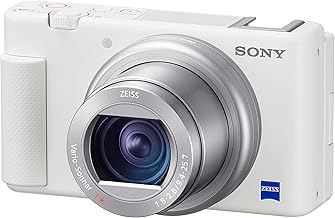
Stepping into the world of vlogging and content creation can feel overwhelming. The sheer number of camera options, from complex mirrorless systems to smartphone attachments, often leaves beginners confused. Enter the Sony ZV-1F, a camera explicitly designed to cut through the noise. As a simplified sibling to the popular Sony ZV1, the ZV-1F promises a streamlined, user-friendly experience for new creators. But does stripping away features result in a better tool for beginners, or does it leave you wanting more? In this comprehensive guide, we'll dive deep into the ZV-1F's capabilities, real-world performance, and help you decide if it's the perfect launchpad for your creative journey.
Unboxing the Sony ZV-1F: First Impressions for Aspiring Creators
Right out of the box, the Sony ZV-1F feels purpose-built. Its compact, lightweight design is immediately appealing for anyone who plans to film on the go. Unlike bulkier Sony Cybershot models of the past, the ZV-1F has a clean, modern aesthetic focused on function. The grip is comfortable for handheld shooting, and the articulating flip-out screen is large and bright—a non-negotiable feature for any solo vlogger. The button layout is refreshingly simple, with dedicated buttons for recording and a background defocus (bokeh) effect, signaling Sony's intent to prioritize ease of use. For someone transitioning from smartphone filming, this camera feels familiar yet more substantial, offering a tangible upgrade in content creation potential without the intimidation factor of a professional camera.
Core Features Designed for the Modern Creator
The Fixed Wide-Angle Lens: A Double-Edged Sword
The most significant design choice on the ZV-1F is its fixed 20mm f/2.0 prime lens. This is a stark departure from the zoom lens on the original ZV1. For YouTube vlogging, this wide-angle is fantastic. It allows you to hold the camera at arm's length and still fit yourself and a decent amount of your environment into the frame, which is ideal for talking-head videos, room tours, or cooking tutorials. The bright f/2.0 aperture helps in lower light. However, the lack of optical zoom is a genuine limitation. You cannot zoom in to capture details or compress backgrounds. This makes the ZV-1F highly specialized for self-shooting and less versatile for capturing varied content like events or distant subjects, a point first-time buyers must seriously consider.
Autofocus and Audio: Where the ZV-1F Shines
Sony's renowned Real-time Eye AF and Tracking autofocus are present here, and they work flawlessly. For a beginner, this is a game-changer. You can focus entirely on your performance without worrying about the camera losing your face or eyes. The audio performance is another highlight. The built-in directional 3-capsule mic does an excellent job of isolating your voice from background noise. The included wind screen is effective for outdoor shooting, and the multi-interface shoe allows for easy attachment of higher-end microphones like Sony's ECM series, making it a solid piece of creator gear that can grow with you.
Simplified Menu and Creator-Centric Modes
Sony has decluttered the menu system compared to its other cameras. You won't find hundreds of cryptic settings. Instead, you get modes like "Product Showcase Setting," which quickly shifts focus from your face to an object you hold up to the camera—perfect for unboxing or review videos. The background defocus/crisp focus button and the adjustable soft skin effect are tailored for creators who want professional-looking results without post-production knowledge. This focus on creator-friendly features solidifies its position as a top vlog camera for those starting out.
Image and Video Quality: Real-World Performance
The ZV-1F uses a large 1-inch Exmor RS CMOS sensor, the same size as in many high-end compact cameras. In good light, the 4K video is sharp, detailed, and colors are pleasing straight out of the camera, with Sony's reliable color science. The skin tones look natural, especially with the soft skin effect turned on low. In 1080p, the quality remains high, and the camera offers slow-motion options up to 120fps. However, low-light performance shows some limitations. While the f/2.0 lens helps, the smaller sensor (compared to APS-C or full-frame cameras) struggles with noise in very dark environments. For well-lit indoor setups or daytime outdoor vlogging, the quality is more than sufficient for social media platforms. For a camera for beginners, the image quality is a significant step up from any smartphone, providing that "cinematic" look new creators often seek.
Who Is the Sony ZV-1F Really For? (And Who Should Look Elsewhere)
The ZV-1F is not for everyone, and that's by design.
Ideal For:
- Absolute Beginners: If you're making your first videos and find other cameras confusing, the ZV-1F's simplicity is a huge benefit.
- Solo Vloggers: Creators who film themselves talking directly to the camera, especially in indoor or controlled environments.
- Social-First Creators: Those creating content primarily for YouTube Shorts, TikTok, or Instagram Reels, where ultra-wide, stable selfie shots are the norm.
- Smartphone Upgraders: Individuals wanting better audio, autofocus, and separation from their background without learning complex editing software.
Not Ideal For:
- Versatile Shooters: If you need one camera for vlogging, photography, and capturing events, the lack of zoom is a major drawback.
- Low-Light Specialists: Creators who frequently film in dimly lit restaurants, concerts, or at night may find the image quality lacking.
- Control Enthusiasts: Those who want manual control over every setting like shutter speed, aperture, and ISO will feel constrained.
- Existing ZV1 Owners: The ZV-1F is a step down in versatility from the original Sony ZV1, which offers a zoom lens and a built-in ND filter.
Final Verdict: A Powerful, Purpose-Built Starter Camera
The Sony ZV-1F is a fascinating and successful experiment in specialized design. It doesn't try to be everything to everyone. Instead, it excels brilliantly at one thing: making it incredibly easy for a new creator to start producing high-quality, front-facing video content with excellent audio and autofocus. Its limitations—the fixed lens and simplified controls—are the very features that make it accessible. If your vision aligns with its strengths (talking to the camera in a well-lit setting), it is arguably one of the best and most frustration-free ways to start your content creation journey. However, if you foresee needing more flexibility, the original Sony ZV1 or an entry-level mirrorless camera with a kit lens might be a more future-proof investment. For the right beginner, the ZV-1F isn't just a camera; it's a confident first step into the creator economy.