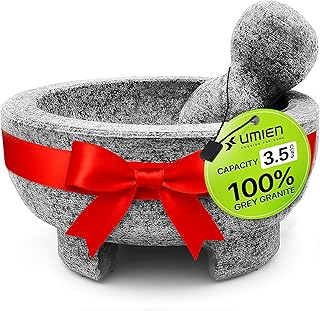
For centuries, cooks around the world have relied on the simple, powerful action of grinding and crushing to unlock the deepest flavors in their ingredients. At the heart of this tradition are two iconic tools: the ancient Mexican Molcajete, carved from porous volcanic rock, and the more universal granite mortar and pestle. While they share a common purpose, their materials, heritage, and performance create distinct culinary experiences. This guide will delve into the history, uses, and key differences between these tools, helping you decide which one belongs in your kitchen.
The Molcajete: A Pillar of Mexican Culinary Heritage
The Molcajete (from the Nahuatl words "molcaxitl" for bowl and "tlaxcalli" for tortilla) is more than just a kitchen tool; it's a cultural artifact. Traditionally made from a single block of vesicular basalt, a rough, porous volcanic rock, its creation is an artisanal process. The unpolished, gritty interior surface is its defining characteristic. This texture is not a flaw but a feature, designed over generations to efficiently grind spices, seeds, and herbs. The companion pestle is called a "tejolote." Beyond practical use, the Molcajete is central to making iconic dishes like authentic salsa, guacamole, and moles, where its stone is believed to impart a unique, earthy flavor that metal or ceramic blenders cannot replicate.
The Modern Granite Mortar and Pestle: Engineered for Performance
In contrast, the modern granite mortar and pestle is a refinement focused on durability and versatile performance. Granite is an igneous rock like basalt but is typically denser, less porous, and polished to a smoother finish. A high-quality set, like the ChefSofi Mortar and Pestle Set, often uses unpolished or lightly textured granite to enhance grinding efficiency while maintaining a more uniform and less absorbent surface than traditional volcanic rock. This design makes it exceptionally effective for a wide range of tasks, from pulverizing hard spices and making pastes to crushing garlic and nuts. Its heavy weight provides stability, and its non-porous nature makes it easier to clean and less likely to retain strong odors, a common consideration for a multi-purpose kitchen mortar and pestle.
Key Differences: Material, Maintenance, and Use
Understanding the core differences will guide your choice:
Material & Surface: The traditional Molcajete uses porous, rough volcanic rock. Modern granite sets use dense, often unpolished granite for a balance of grip and cleanability. The porosity of a molcajete requires a lengthy initial seasoning process to seal the surface, while a granite mortar typically needs only a simple wash before first use.
Flavor & Tradition: Advocates swear the Molcajete adds a subtle, mineral complexity to foods, especially salsas. The granite mortar offers a neutral, non-absorbent grinding surface that presents pure, unaltered flavors of the ingredients.
Versatility: A granite mortar and pestle set is generally more versatile for global cuisines. It can handle everything from Thai curry pastes and Indian spice blends to European pestos and Middle Eastern zhugs with equal efficacy. The molcajete is unparalleled for its intended traditional Mexican recipes.
Maintenance: Granite is easier to maintain. Its less porous surface doesn't hold onto oils and pigments as tenaciously. A molcajete, once seasoned, is durable but requires more mindful cleaning to preserve its seasoning and prevent flavor transfer.
Choosing Your Tool: A Practical Guide
Your choice depends on your cooking style and priorities.
Choose a Traditional Molcajete if: You are passionate about authentic Mexican cuisine and want to connect with its culinary heritage. You don't mind the initial seasoning ritual and plan to use it primarily for salsas, guacamole, and dry spices. You appreciate the rustic, organic aesthetic as a kitchen centerpiece.
Choose a Modern Granite Mortar and Pestle if: You need a versatile, hard-working tool for a wide array of international cuisines. You want a low-maintenance, easy-to-clean appliance that can tackle hard spices, nuts, and seeds without dedicated seasoning. You value heavy-duty construction and consistent performance. A set like the ChefSofi 6-inch model, with its 2-cup capacity and included anti-scratch protector, is designed for this kind of reliable, everyday use as both a spice grinder and paste maker.
How to Use and Care for Your Granite Mortar and Pestle
To get the most from a modern granite set, follow these tips. First, always start with dry, hard ingredients to help abrade and naturally "season" the surface. Use a firm, circular grinding motion, pressing down with the pestle. For wet ingredients like garlic or herbs, add a pinch of coarse salt, which acts as an abrasive. Cleaning is simple: use warm water and a soft brush or cloth. Avoid harsh detergents and never put it in the dishwasher, as this can degrade the stone's surface over time. After washing, dry it thoroughly to prevent water spots. The beauty of a well-made granite mortar and pestle is that it improves with use, developing a patina that makes grinding even more efficient.
Conclusion: Honoring Tradition, Embracing Innovation
Both the Molcajete and the modern granite mortar and pestle are testaments to the timeless utility of manual food preparation. The molcajete is a soulful, traditional tool deeply rooted in a specific culture. The granite mortar and pestle, exemplified by sets like the ChefSofi, is an evolution—a workhorse designed for the demands of a modern, global kitchen. For the home cook seeking authenticity and a specific flavor profile, the molcajete is irreplaceable. For the versatile cook who needs one reliable tool to grind, crush, and blend across countless recipes, a high-quality granite mortar and pestle is an indispensable investment. Ultimately, the best tool is the one you will use regularly to bring fresher, more vibrant flavors to your table.