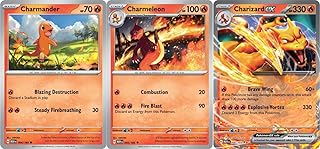
In the vast world of Pokémon, few evolutionary lines capture the imagination quite like the fiery trio of Charmander, Charmeleon, and Charizard. While its adorable first stage and powerful final form often steal the spotlight, the middle evolution, Charmeleon, is a critical and fascinating phase in any trainer's journey. This guide dives deep into everything you need to know about this Fire-type Pokémon, from its biology and evolution to its competitive battle strategies, helping you master this powerful middle stage.
Charmeleon is the evolved form of Charmander, typically reaching this stage at level 16. It embodies the rebellious and fiery spirit of adolescence. Its appearance shifts dramatically from the small, timid Charmander. Charmeleon stands taller, boasts a more pronounced horn, and its tail flame burns more fiercely, reflecting its increased power and sometimes volatile temperament. This stage is a crucial test for trainers, as a well-raised Charmeleon becomes an unstoppable Charizard.
The Evolutionary Journey: From Charmander to Charizard
Understanding Charmeleon requires looking at its place in the evolutionary chain. Charmander, the starter Pokémon known for the flame on its tail, evolves into Charmeleon. This evolution isn't just cosmetic; it's a massive leap in power and capability. The most critical evolution, however, comes next. Charmeleon evolves into the iconic Charizard at level 36. This final transformation grants it the powerful Flying type alongside Fire, drastically altering its movepool and battle role. Proper care during the Charmeleon phase is essential for maximizing Charizard's potential later on.
Charmeleon Base Stats and Battle Profile
As a pure Fire-type in its middle stage, Charmeleon's stats are a clear upgrade from Charmander, focusing on offensive prowess. Here’s a breakdown of its typical base stats:
- HP: 58
- Attack: 64
- Defense: 58
- Special Attack: 80
- Special Defense: 65
- Speed: 80
This stat spread highlights Charmeleon's role as a special attacker. With a solid Special Attack of 80 and Speed of 80, it can outspeed many mid-game Pokémon and hit hard with Fire-type moves like Flamethrower. However, its defenses are relatively low, making it vulnerable to super-effective hits from Water, Rock, and Ground-type moves. This glass cannon profile teaches trainers valuable lessons about positioning and type matchups.
Best Movesets and Strategies for Charmeleon
To make the most of your Charmeleon before it evolves, you need a strategic moveset. While it doesn't have the vast movepool of Charizard, it has access to several key techniques.
Offensive Sweeper Set:
This set leverages Charmeleon's speed and special attack.
- Flamethrower/Fire Blast: Your reliable, powerful STAB (Same-Type Attack Bonus) move. Flamethrower offers accuracy, while Fire Blast provides raw power.
- Dragon Rage (in earlier generations): A unique move that deals a fixed 40 damage, useful for wearing down specific foes.
- Slash: A high-critical-hit-ratio physical move that can surprise opponents expecting special attacks.
- Smokescreen/Scary Face: Utility moves to lower the opponent's accuracy or speed, creating openings.
Balanced Utility Set:
This set prepares Charmeleon for various situations in a playthrough.
- Flamethrower: Consistent Fire-type damage.
- Brick Break/Dig: Coverage moves to handle Rock, Normal, and Steel-types that resist Fire.
- Dragon Claw (upon evolution or via TM): Excellent coverage against Dragon-types.
- Will-O-Wisp: A status move to cripple physical attackers by burning them, halving their Attack stat.
Where to Find and Catch Charmeleon
Unlike its pre-evolution, Charmeleon is rarely found in the wild in most Pokémon games, as it is primarily obtained through evolution. However, there are exceptions. In some games, like Pokémon Yellow or certain later titles with specific events or areas, wild Charmeleon can be encountered. Typically, the most reliable method is to catch a Charmander (often as a starter or in special locations like the Kanto Pokémon Island in later games) and train it to level 16. Focusing on battling Bug, Grass, Steel, and Ice-type Pokémon will help it gain experience quickly to reach its powerful Charmeleon form.
Training Your Charmeleon for a Powerful Charizard
The time your Pokémon spends as Charmeleon is a training ground for its final form. Key strategies include:
- EV Training: Defeat Pokémon that yield Special Attack EVs (like Gastly) and Speed EVs (like Pidgey) to maximize Charmeleon's offensive strengths before it evolves.
- Move Tutoring: Ensure it learns important moves like Flamethrower before evolution, as some move learnsets change.
- Type Exposure: Use this phase to learn type matchups. Its weakness to Water, Rock, and Ground will carry over to Charizard (who gains a 4x weakness to Rock), so learning to switch out strategically is crucial.
- Hold Items: Equip items like Charcoal to boost Fire-type moves or a Quick Claw to occasionally strike first.
Common Mistakes Trainers Make with Charmeleon
Many trainers rush to evolve their Charmeleon or misuse it in battle. Here are pitfalls to avoid:
- Neglecting Its Speed: Don't just rely on power. Charmeleon's 80 Speed is one of its best assets; use it to strike first against slower opponents.
- Ignoring Coverage Moves: Relying solely on Fire moves makes it easy prey for Rock and Water types. Always teach it a move like Brick Break or Dragon Claw for coverage.
- Evolving Too Early (Sometimes): While evolving at level 36 is standard, sometimes delaying evolution briefly can allow Charmeleon to learn a specific move earlier than Charizard would. Check your game's learnset!
- Forgetting Its Frailty: With mediocre defenses, Charmeleon cannot take many hits. It's a hit-and-run attacker, not a tank.
Charmeleon in the Competitive Landscape
In competitive play, Charmeleon is almost always overshadowed by its final evolution, Charizard, especially with the latter's Mega Evolutions and Gigantamax forms. However, in specific formats like "Middle Evolution" cups or for trainers seeking a challenge, Charmeleon can be a potent special sweeper. Its access to Solar Power as a Hidden Ability (which boosts Special Attack in sunlight but costs HP) can make it devastating under sun teams, though its fragility is a major limiting factor. It serves as a reminder that strategic team support is key for Pokémon with offensive-focused stat distributions.
In conclusion, Charmeleon is much more than just a stepping stone to Charizard. It is a powerful and independent Fire-type Pokémon that teaches vital lessons about evolution management, type coverage, and offensive strategy. By understanding its stats, optimizing its movesets, and training it thoughtfully, you not only build a stronger Charizard but also gain a deeper appreciation for this fiery middle stage. Whether you're a new trainer starting in Kanto or a veteran revisiting classic strategies, mastering the flame of Charmeleon is a rewarding part of any Pokémon journey.